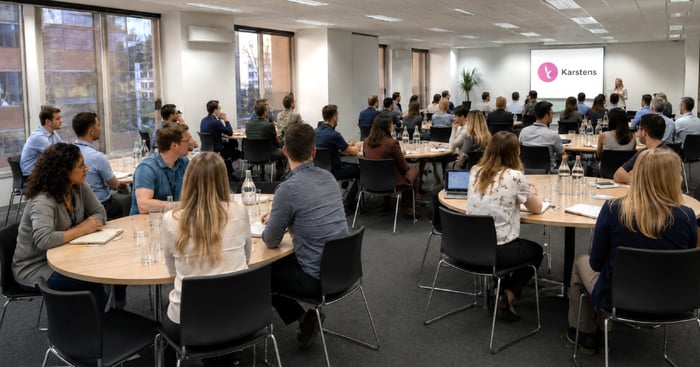

National Training Rollouts
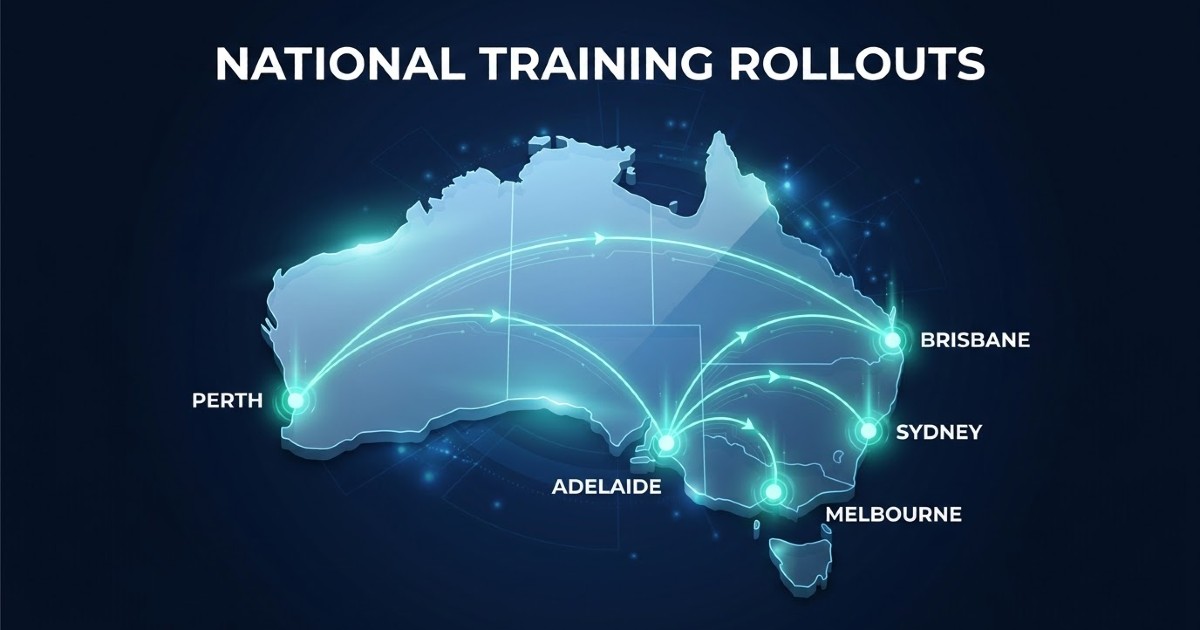
National Training Rollouts;
How to Deliver Consistent Training Across Multiple Australian Cities
National training programs involve more than delivering the same presentation in different locations. Organisations need to coordinate venues, facilitators, technology, catering, participant communications and materials while maintaining a consistent learning experience from one city to the next.
A well-planned national training rollout creates clear standards for every location while allowing enough flexibility to respond to local requirements.
A national training rollout is the coordinated delivery of the same or similar training program across multiple cities or locations. Successful rollouts standardise core elements such as learning objectives, room layouts, technology, facilitator preparation, participant communications and event logistics so employees receive a consistent training experience regardless of where they attend.
Why National Training Rollouts Are More Complex
Delivering training in one city already involves multiple moving parts. A national rollout multiplies those requirements.
Organisers may need to coordinate:
- Several venues
- Different participant numbers
- Facilitator travel
- Room configurations
- Presentation technology
- Catering
- Training materials
- Local contacts
- Dietary requirements
- Accessibility
- Last-minute changes
Small inconsistencies can become larger problems when repeated across several locations.
If one venue has a different layout, another has different AV connections and a third follows a different catering schedule, facilitators may spend valuable time adjusting instead of focusing on learning outcomes.
The objective should therefore be to create a repeatable national framework.
How to Plan a National Training Rollout
1. Define the National Training Objective
Start by establishing exactly what the program needs to achieve.
National training may support:
- New systems or technology
- Compliance requirements
- Product launches
- Sales development
- Leadership programs
- Policy changes
- Employee induction
- Professional certification
- Organisational change
- Skills development
Determine what participants should know, practise or apply after attending.
Also identify which parts of the program must remain identical across every city. These may include learning objectives, activities, assessments, presentation content and participant resources.
2. Build a National Training Schedule
Once the objectives are clear, develop the rollout schedule.
Consider:
- Which cities will participate
- Number of sessions in each city
- Participant availability
- Facilitator travel
- Setup time
- Public holidays
- Multi-day requirements
- Repeat sessions
- Buffer time between cities
Avoid creating a schedule so tight that a delayed flight or extended session affects the next location.
Where possible, allow facilitators enough time to travel, review feedback and prepare for the next session.
3. Select Consistent Training Venues
Venue consistency can make national delivery considerably easier.
Look for comparable standards across cities, including:
- Similar room layouts
- Comfortable furniture
- Presentation technology
- Reliable Wi-Fi
- Breakout spaces
- Catering
- Onsite support
- Participant amenities
Venue consistency matters because facilitators can arrive knowing how the room will operate, while participants receive a broadly comparable experience in every city. It also reduces repeated planning, briefing and troubleshooting for the organising team.
The rooms do not need to be identical, but the operational experience should be familiar.
4. Standardise the Room Layout
Choose a preferred room layout and use it consistently where possible.
Classroom Layout
Classroom seating works well for structured courses, laptops, workbooks and certification programs.
Cabaret Layout
Cabaret seating supports group activities, workshops and collaborative learning.
U-Shape Layout
U-shape seating suits facilitated discussion, demonstrations and interactive programs.
Boardroom Layout
Boardroom seating works well for executive development and smaller leadership programs.
| Layout | Best suited to | Main benefit | National rollout consideration |
|---|---|---|---|
| Classroom | Structured training | Individual workspace | Keep table and screen positioning consistent |
| Cabaret | Workshops | Encourages collaboration | Maintain similar group sizes |
| U-shape | Facilitated discussion | Strong interaction | Confirm room dimensions |
| Boardroom | Executive training | Focused discussion | Best for smaller groups |
Providing venues with a standard room diagram can help maintain consistency.
5. Standardise Technology
Technology differences can cause unnecessary delays during national programs.
Confirm requirements for:
- Presentation screens
- HDMI or USB-C connectivity
- Wireless presentation
- Microphones
- Speakers
- Wi-Fi
- Video conferencing
- Hybrid participation
- Charging access
- Technical assistance
For multi-city training, organisers should standardise the presentation device connections, screens, internet requirements, audio and hybrid technology required in every venue. Facilitators should know what equipment will be available before they arrive.
Keep presentation files in more than one location and carry essential adaptors.
For programs involving videos, online assessments or video conferencing, test the complete setup before participants arrive.
6. Create One National Training Brief
Prepare a master event brief that can be used for every city.
Include:
- Event name
- City
- Date
- Participant numbers
- Room configuration
- Agenda
- Facilitator details
- AV requirements
- Hybrid requirements
- Catering schedule
- Dietary information
- Breakout requirements
- Accessibility
- Materials
- Signage
- Venue access time
- Onsite contacts
A national brief reduces the chance of important information being communicated differently to individual venues.
It also gives facilitators and organisers one reference point.
7. Plan Facilitator Travel and Logistics
Facilitator travel should be treated as part of the training program rather than a separate administrative task.
Plan:
- Flights or transport
- Accommodation
- Arrival times
- Venue access
- Presenter equipment
- Materials
- Backup devices
- Personal preparation time
Avoid scheduling trainers to arrive immediately before a session where possible.
National programs can be physically demanding. Travel fatigue may affect delivery, particularly during intensive multi-day programs.
8. Coordinate Training Materials
Decide how participant and facilitator materials will reach each location.
Materials may include:
- Workbooks
- Name badges
- Activity cards
- Assessments
- Certificates
- Pens and notepads
- Presenter guides
- Printed resources
Possible approaches include:
Shipping Between Cities
This may reduce duplication but creates timing risk if freight is delayed.
Shipping Directly to Each Venue
Useful when materials can be prepared in advance and venues are able to receive them.
Local Printing
Can simplify freight but requires clear quality and version control.
Digital Materials
Reduce physical logistics but depend on participant devices and internet access.
For important programs, maintain a backup copy of essential documents digitally.
9. Standardise Catering
Catering contributes to the participant experience and can affect the timing of the day.
National programs should create a broadly consistent standard for:
- Morning tea
- Lunch
- Afternoon tea
- Coffee and tea
- Water
- Dietary requirements
- Service timing
- Break duration
Menus do not need to be identical in every city, but service levels and timing should align with the training agenda.
For example, if morning tea is scheduled at 10:30 am nationally, each venue should be briefed to have catering ready at that time.
10. Manage Dietary Requirements Centrally
Dietary requirements can become difficult to manage when participant information is collected separately for each city.
Use one registration process and one central record.
The organiser can then provide each venue with the relevant requirements for that location.
Confirm deadlines for submitting dietary requirements and communicate these clearly to participants.
11. Standardise Participant Communications
Participants should receive consistent information regardless of where they are attending.
A standard confirmation email may include:
- Venue name and address
- Arrival time
- Agenda
- Public transport information
- Parking information where relevant
- Building access
- What participants should bring
- Pre-work
- Dietary information
- Technology requirements
- Contact details
Only location-specific information should change.
This creates a more professional experience and reduces participant questions.
12. Create a Process for Changes
National programs require a clear process for last-minute adjustments.
Changes may include:
- Participant increases
- Participant decreases
- Dietary additions
- Equipment requests
- Room changes
- Facilitator changes
- Date changes
- Session cancellations
Agree in advance who has authority to make changes and how they will be communicated.
Having one national point of contact can reduce confusion when changes affect several cities.
One National Venue Partner Versus Multiple Venue Suppliers
Using one national venue partner can simplify coordination, while separate local suppliers may provide greater flexibility in individual cities.
| Consideration | One national venue partner | Multiple venue suppliers |
|---|---|---|
| Administration | Centralised | Repeated for each supplier |
| Contacts | One primary relationship | Multiple local contacts |
| Room consistency | Easier to coordinate | Can vary significantly |
| AV standards | Easier to standardise | Requires separate confirmation |
| Catering | Central briefing possible | Managed individually |
| Proposals | Can be consolidated | Separate quotes |
| Changes | One escalation point | Multiple processes |
| Facilitator familiarity | Greater consistency | New environment each city |
| Participant experience | Easier to standardise | More variation possible |
The main benefit of using one national venue partner is reduced administration and greater consistency. Organisers can coordinate room layouts, technology, catering and venue requirements through one relationship rather than briefing separate suppliers for every city.
The best option depends on the program, locations and level of flexibility required.
How to Maintain a Consistent Participant Experience
Participants attending in different cities should still feel they are taking part in the same national program.
Standardise:
- Event branding
- Registration
- Signage
- Agenda
- Room layout
- Facilitator materials
- Participant workbooks
- Catering schedule
- Technology
- Feedback forms
- Follow-up communication
Complete uniformity is not necessary.
The important point is that participants receive comparable learning, comfort and support wherever the program is delivered.
Hybrid and Blended National Training Rollouts
Not every participant needs to attend every component in person.
A blended rollout might combine:
- Pre-learning modules
- Face-to-face training
- Remote sessions
- Recorded content
- Digital resources
- Online follow-up
- Coaching sessions
Hybrid delivery can also allow remote employees or specialists to join an in-person program.
However, hybrid participation should be intentionally designed.
Confirm:
- Cameras
- Microphones
- Wi-Fi
- Video-conferencing platform
- Remote activities
- Facilitation methods
- Technical support
Remote participants should be able to contribute rather than simply observe.
National Training Rollout Timeline
8–12 Weeks Before
- Confirm objectives
- Select cities
- Establish dates
- Estimate participant numbers
- Confirm facilitator availability
- Shortlist venues
- Determine delivery format
4–8 Weeks Before
- Confirm venues
- Select room layouts
- Confirm AV
- Plan catering
- Develop participant communications
- Prepare training materials
- Plan facilitator travel
2–4 Weeks Before
- Finalise agenda
- Confirm participant numbers
- Collect dietary requirements
- Finalise travel
- Brief venues
- Confirm hybrid requirements
- Arrange materials
One Week Before Each Session
- Confirm final attendance
- Review room setup
- Confirm catering
- Test technology where possible
- Check materials
- Confirm onsite contacts
After Each City
- Review participant feedback
- Record attendance
- Identify technical issues
- Review venue feedback
- Ask facilitators what could improve
- Apply lessons to the next location
A major advantage of a staged rollout is that each session can improve the next.
National Training Rollout Checklist
Program Planning
- Define objectives
- Select cities
- Confirm dates
- Estimate participant numbers
- Confirm facilitators
- Select delivery format
Venue Requirements
- Confirm room layout
- Check capacity
- Confirm AV
- Confirm Wi-Fi
- Check breakout requirements
- Arrange catering
- Confirm accessibility
Facilitator Requirements
- Book travel
- Arrange accommodation
- Confirm venue access
- Prepare devices
- Save presentation files
- Carry backup files
- Confirm materials
Participant Requirements
- Manage registration
- Send venue details
- Provide agenda
- Send pre-work
- Collect dietary information
- Collect accessibility requirements
- Confirm arrival instructions
Final Confirmation
- Final participant numbers
- Room setup
- Technology
- Catering
- Materials
- Onsite contact
- Facilitator contact
- Hybrid links where required
Common National Training Rollout Mistakes
Avoid:
- Booking each venue without common standards
- Using different room layouts unnecessarily
- Failing to test AV
- Scheduling travel too tightly
- Using too many points of contact
- Sending inconsistent participant information
- Collecting dietary requirements separately
- Shipping materials too late
- Ignoring facilitator fatigue
- Leaving room changes until the last minute
- Treating each city as an unrelated event
- Failing to review feedback between sessions
Measuring the Success of a National Training Rollout
Learning outcomes remain important, but national programs should also measure operational consistency.
Useful measures may include:
- Attendance
- Completion rates
- Assessment results
- Participant feedback
- Facilitator feedback
- Technology issues
- Venue issues
- Catering feedback
- Engagement
- Post-training application
- Consistency between cities
After each session, ask:
What should remain exactly the same, and what should we improve before the next city?
This allows the rollout to become progressively stronger.
National Training Rollouts with Karstens
Karstens provides purpose-built conference and training venues in Melbourne, Sydney, Brisbane, Perth and Adelaide.
For organisations delivering national training programs, working with one venue partner can simplify coordination across multiple cities.
Depending on the selected venue, room and package, facilities may include:
- Purpose-built training rooms
- Classroom, cabaret, U-shape and boardroom configurations
- Built-in presentation technology
- Reliable Wi-Fi
- Hybrid capability
- Breakout areas
- Ergonomic seating
- Natural daylight
- In-house catering
- Dietary management
- Onsite event and technical support
Karstens can support full-day, multi-day, recurring and multi-city training programs.
A single national contact can help coordinate room layouts, technology, catering and event requirements across the program.
Confirm specific facilities and package inclusions when requesting a proposal.
Frequently Asked Questions
What Is a National Training Rollout?
A national training rollout is the coordinated delivery of a training program across multiple locations. Organisations typically standardise learning objectives, content, room requirements, technology, participant communications and event logistics while allowing for local variations such as participant numbers and venue configuration.
How Do You Plan Training Across Multiple Cities?
Start with common training objectives, then establish cities, dates, facilitators, venue standards, room layouts, technology and catering requirements. Create one national event brief and use consistent participant communications across the program.
What Are the Biggest Challenges with National Training Programs?
Common challenges include venue inconsistency, facilitator travel, different technology, catering coordination, participant changes, material distribution and managing multiple suppliers.
Why Use One National Venue Provider?
One venue partner like Karstens can reduce repeated administration and make room layouts, technology, catering and communication easier to coordinate across cities.
How Can Room Layouts Be Kept Consistent Across Cities?
Create a standard room setup showing furniture configuration, presenter position, screen location and participant numbers. Provide this specification to each venue.
How Should Technology Be Managed Across Multiple Training Venues?
Create a standard AV specification and confirm it with each venue in advance. Facilitators should know the screen, connections, Wi-Fi and audio available before arriving.
How Far in Advance Should National Training Venues Be Booked?
Book as early as practical once dates and approximate participant numbers are known. Larger, multi-day or highly customised programs generally require more planning.
How Should Catering Be Coordinated?
Create a common catering schedule and service standard, then provide each venue with local participant and dietary information.
How Should Dietary Requirements Be Managed?
Collect dietary information centrally during registration and communicate the relevant requirements to each venue within its required timeframe.
What Is the Best Way to Transport Training Materials?
Options include direct shipping, local printing, digital resources or transporting materials with facilitators. The right approach depends on volume, timing and the importance of the materials.
Can National Training Programs Include Hybrid Participants?
Yes. Hybrid delivery can support remote participants, but technology and facilitation should be designed so remote attendees can see, hear and contribute effectively.
How Can Participant Experience Remain Consistent Across Cities?
Standardise communications, branding, agenda, room requirements, materials, catering timing and follow-up while allowing sensible local variations.
What Should Be Included in a National Training Venue Proposal?
A proposal should clearly identify venues, dates, rooms, layouts, technology, catering, breakout requirements, onsite support and any additional charges.
Can Karstens Support Recurring National Training Programs?
Karstens can support recurring and multi-city training programs subject to venue availability and individual program requirements.
Which Australian Cities Does Karstens Operate In?
Karstens operates purpose-built conference and training venues in Melbourne, Sydney, Brisbane, Perth and Adelaide.
Plan Your National Training Rollout with Karstens
Successful national training depends on consistency, planning and strong coordination.
Organisations should establish common standards for:
- Venues
- Room layouts
- Technology
- Catering
- Participant communications
- Facilitator preparation
- Training materials
- Reporting
Karstens can help organisations coordinate training across Melbourne, Sydney, Brisbane, Perth and Adelaide through one national venue relationship.
Contact Karstens to discuss national training rollouts, multi-city training rooms, AV, hybrid delivery, catering, recurring programs and tailored national proposals.
More about planning, delivering and measuring corporate training