
Boardroom, Cabaret or Theatre? Choosing the Best Seating Style for Meetings and Conferences

When planning a meeting, training session or conference, one decision has a bigger impact than many organisers realise: the seating style.
The right room layout can improve engagement, learning outcomes, collaboration and overall event success. The wrong layout can leave delegates disengaged, uncomfortable or less likely to participate.
Choosing the right conference seating style starts with one question: what do you want attendees to do? If the goal is to listen to a keynote, theatre style may work best. If the goal is discussion or group work, cabaret or U-shape may be more effective.
At Karstens Conference & Training Venues, we help organisations optimise their room setup for meetings, training sessions, conferences and workshops across Melbourne, Sydney, Brisbane, Perth and Adelaide. Here is what to consider.
Why Conference Seating Styles Matter
Your seating layout directly influences how people interact, how well they can see and hear, how comfortable they feel and how likely they are to participate.
Seating Drives Event Behaviour
A room setup quietly tells attendees what is expected of them. Theatre style says, “listen to the presenter.” Cabaret says, “discuss and collaborate.” Classroom style says, “focus, learn and take notes.” Boardroom style says, “contribute to the conversation.”
This is why seating style should never be an afterthought. It should be chosen to support the event outcome.
Start With the Outcome
Before choosing a layout, ask what delegates need to do during the session. Do they need to listen, learn, discuss, decide, collaborate, network or complete practical activities?
Once the outcome is clear, the right seating style becomes much easier to choose.
The 5 Most Effective Conference Seating Styles
Boardroom Style
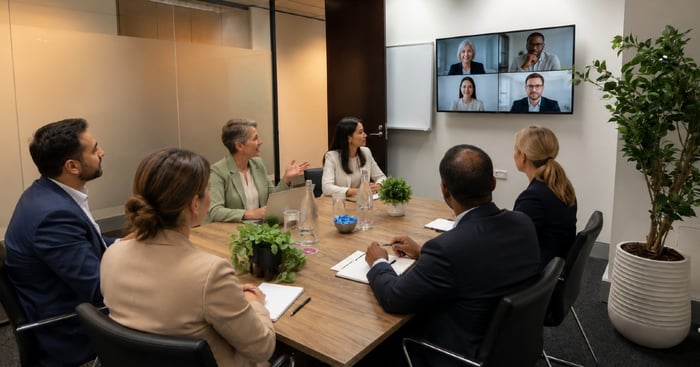
Boardroom style uses a single central table with attendees seated around it. It is one of the most effective layouts for smaller meetings where discussion and decision-making are important.
Boardroom style is best for executive meetings, leadership discussions, strategy sessions, client briefings and board meetings.
The strength of this layout is equality. Everyone is visible, close to the discussion and encouraged to contribute. It creates a professional environment for focused conversation.
The limitation is capacity. Boardroom style is not suitable for large groups and is less effective for formal presentations where delegates need to focus on a screen for long periods.
U-Shape Style
U-shape style uses tables arranged in a U shape, with an open front for the presenter or facilitator. This layout is popular for training, workshops and facilitated discussions.
U-shape seating is best for interactive learning, small group training, workshops and sessions where delegates need to see both the presenter and each other.
It works well because it gives clear visibility to the front of the room while still encouraging discussion. The open centre also allows a facilitator to move around and engage with participants.
The main limitation is space. U-shape seating takes up more room than theatre or classroom style and is not efficient for large groups.
Classroom Style
Classroom style uses rows of tables facing the front of the room. It is one of the best layouts for structured learning.
Classroom seating is best for training sessions, seminars, certification programs, professional development and events where delegates need to take notes or use laptops.
This layout supports focus and individual work. It gives attendees table space for materials and helps maintain attention toward the presenter.
The limitation is that it reduces interaction between participants. It works well for learning, but less well for group discussion or highly collaborative sessions.
Cabaret Style
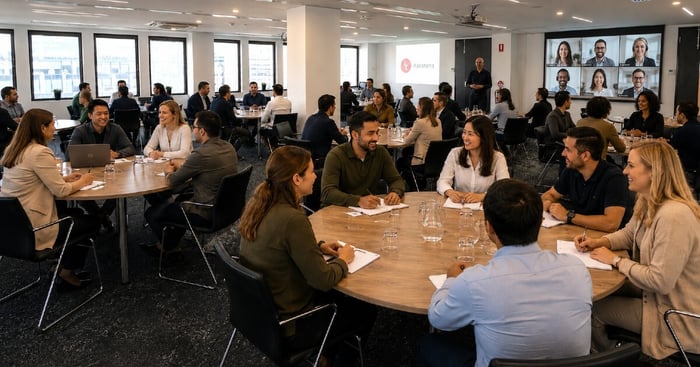
Cabaret style uses round or shared tables arranged so delegates can work in small groups while still facing the front where possible.
Cabaret seating is best for workshops, group learning, planning days, collaborative sessions and conferences with interactive elements.
It works because it balances presenter focus with group discussion. Delegates can listen, then turn easily to discuss ideas with others at their table.
The limitation is that some attendees may need to turn toward the presenter. Cabaret style also requires more room than theatre style because tables take up additional space.
Theatre Style
Theatre style uses rows of chairs facing the front, with no tables. It is the most space-efficient layout for larger audiences.
Theatre seating is best for conferences, keynote presentations, product launches, briefings and events where the main purpose is to listen to a presenter.
It works because it maximises room capacity and keeps attention focused on the stage, screen or presenter.
The limitation is minimal interaction. There is no table space for notes or laptops, and it is not ideal for long training sessions or workshops that require participation.
Conference Seating Style Comparison Table
| Seating Style | Best For | Ideal Group Size | Engagement Level | Interaction Level | Main Advantages | Limitations |
|---|---|---|---|---|---|---|
| Boardroom | Executive meetings, strategy sessions | 4–12 | High | High | Equal participation, strong discussion | Limited capacity |
| U-Shape | Workshops, training, facilitated sessions | 10–25 | High | High | Good visibility, facilitator interaction | Space intensive |
| Classroom | Training, structured learning, note-taking | 15–40 | Medium | Medium | Great for note-taking and longer sessions | Less collaboration |
| Cabaret | Workshops, group learning, collaboration | 20–80 | High | High | Encourages teamwork and discussion | Reduced forward focus, more space required |
| Theatre | Conferences, presentations, large audiences | 40–150+ | Low to Medium | Low | Maximises capacity and presenter focus | Minimal interaction, no tables |
How to Choose the Right Seating Style by Outcome
If Your Goal Is Discussion and Decision-Making
Choose boardroom or U-shape style. These layouts help delegates see each other, contribute to the conversation and stay involved in decision-making.
If Your Goal Is Learning and Training
Choose classroom or cabaret style. Classroom supports structured learning and note-taking, while cabaret is better for training that includes group discussion or activities.
If Your Goal Is Collaboration and Group Work
Choose cabaret or U-shape style. These layouts make it easier for delegates to talk, share ideas and work together.
If Your Goal Is Presenting to a Large Audience
Choose theatre style. It maximises room capacity and keeps the focus on the presenter, screen or stage.
Pro Tips for Better Event Outcomes
Match the Layout to the Agenda
Do not default to one setup because it is familiar. Choose the room layout based on the agenda. A keynote, training activity, panel discussion and workshop may each require a different setup.
Consider Hybrid or Changing Layouts
Some events benefit from more than one layout. For example, you might start with theatre style for a presentation, then move into cabaret for group work. A flexible venue can help you plan these transitions.
Allow Space for Movement
Facilitators need room to move between tables, answer questions and engage with attendees. Delegates also need space to move comfortably during breaks and activities.
Prioritise Comfort
Comfort affects attention. Ergonomic seating, spacing, natural light, room temperature and table space all support better concentration during full-day events.
Choose a Venue That Supports Flexibility
Purpose-built venues can adapt layouts based on final numbers, agenda format and event objectives. This is especially useful when attendance changes or when sessions require different levels of interaction.
Why Purpose-Built Venues Make a Difference
Not all venues are equal when it comes to conference seating styles. A room may technically fit your numbers, but still not support the experience you want to create.
Flexible Room Configurations
Purpose-built conference venues are designed to support multiple layouts, including boardroom, U-shape, classroom, cabaret and theatre styles. This gives organisers more control over the event format.
Better Sightlines and AV
Room layout needs to work with the screen, presenter position, microphones, lighting and sound. Built-in AV and good sightlines help every delegate see and hear clearly.
Breakout Areas and Room Flow
Breakout areas support catering, networking, informal discussion and group activities. They also help delegates reset between sessions and move easily through the day.
How Karstens Helps You Choose the Right Room Setup
Karstens provides purpose-built conference and training venues in Melbourne, Sydney, Brisbane, Perth and Adelaide. Each venue is designed to support professional business events with flexible room layouts, ergonomic seating, built-in AV, breakout areas, catering coordination and onsite support.
The Karstens team can recommend the most suitable seating style based on your event goals, group size, agenda and preferred level of interaction. Whether you are running a board meeting, training session, workshop, seminar, conference or hybrid event, the right room setup can help improve engagement and event outcomes.
Conclusion
The best seating style is not just about capacity. It is about outcomes.
When you align your room setup with your event goals, you create stronger engagement, better learning outcomes and more productive sessions. Boardroom style supports discussion. U-shape supports facilitation. Classroom supports learning. Cabaret supports collaboration. Theatre supports presentations.
Choosing the right conference seating style helps delegates participate more effectively and helps organisers deliver a smoother, more successful event.
Contact Karstens to discuss the best room setup for your next meeting, training session or conference across Melbourne, Sydney, Brisbane, Perth and Adelaide.
Frequently Asked Questions
What Are the Most Common Conference Seating Styles?
The most common conference seating styles are boardroom, U-shape, classroom, cabaret and theatre. Each layout supports a different type of event, from executive meetings and training sessions to workshops and large presentations.
What Is the Best Seating Style for Training Sessions?
Classroom style is often best for structured training because it gives delegates table space for notes, laptops and materials. Cabaret or U-shape may be better when training includes discussion, activities or group work.
What Is the Best Seating Style for Conferences?
Theatre style is often best for larger conferences focused on presentations and keynote speakers. Cabaret style may be better for conferences that include group discussion, workshops or collaborative activities.
What Is Cabaret Style Seating?
Cabaret style seating uses round or shared tables arranged so delegates can work in groups while still facing the presenter where possible. It is useful for workshops, training, planning days and interactive conferences.
What Is U-Shape Seating Best For?
U-shape seating is best for workshops, training sessions and facilitated discussions. It gives delegates clear visibility of the presenter while encouraging conversation and participation.
What Is Classroom Style Seating Best For?
Classroom style seating is best for training, seminars, certification programs and structured learning. It supports note-taking, laptop use and focus toward the front of the room.
How Do I Choose the Right Conference Room Layout?
Choose the layout based on what attendees need to do. Use theatre for listening, classroom for learning, cabaret for collaboration, U-shape for interaction and boardroom for decision-making.
Why Does Seating Style Affect Delegate Engagement?
Seating style affects how easily delegates can see, hear, speak, take notes and interact with others. The right layout supports participation, comfort and learning outcomes.