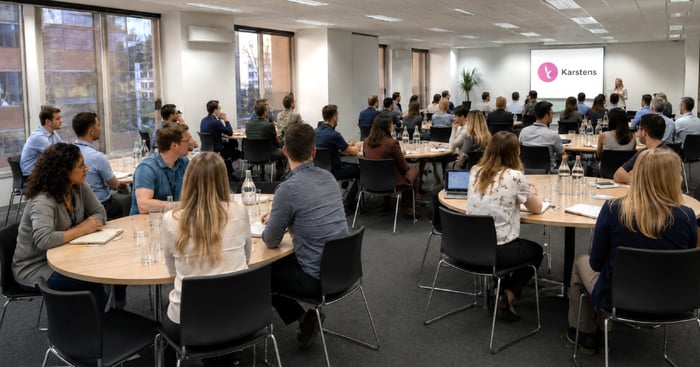

Conference Centres vs Coworking Spaces

Conference Centres vs Coworking Spaces: Which Is Better for Corporate Events?
When planning a corporate meeting, conference, training program or workshop, organisers often compare two very different venue types: a purpose-built conference centre and a coworking meeting space.
The main difference is purpose. Conference centres are designed primarily for organised business events, conferences and training, while coworking spaces are designed mainly for flexible working and may offer meeting rooms as an additional service. Coworking spaces can work well for smaller, shorter meetings, while conference centres may better suit full-day and more complex corporate events.
Neither option is automatically better. The right venue depends on your event objective, participant numbers, duration, room layout, technology, catering, privacy and the level of onsite support required.
What Is a Conference Centre?
A conference centre is a venue designed primarily for professional meetings, conferences, training and business events.
Depending on the venue, facilities may be designed around:
- Corporate conferences
- Training programs
- Workshops
- Professional development
- Leadership programs
- Compliance training
- Hybrid meetings
- Multi-day programs
- Recurring training
Purpose-built conference venues may offer multiple room configurations, presentation technology, breakout areas, catering and onsite event support.
Because business events are their main purpose, the venue operation can be structured around participant arrival, room setup, training schedules, catering breaks and technical requirements.
What Is a Coworking Space?
Coworking spaces primarily provide flexible workplaces for individuals and businesses.
They commonly offer:
- Shared work areas
- Hot desks
- Private offices
- Small meeting rooms
- Collaboration spaces
- Flexible workspace arrangements
Coworking meeting rooms can be practical for short meetings, interviews, small workshops and team discussions, particularly when extensive catering, AV or event management is not required.
Individual coworking venues vary considerably, so organisers should assess the actual room and services available.
Conference Centres vs Coworking Spaces: Quick Comparison
| Consideration | Purpose-Built Conference Centre | Coworking Space |
|---|---|---|
| Primary purpose | Conferences, training and business events | Flexible working and offices |
| Corporate training | Often a core use | Depends on room |
| Short meetings | Suitable | Often highly suitable |
| Flexible layouts | Common | May be limited |
| Full-day comfort | Often an important design consideration | Varies |
| AV | Business-event focused | Usually simpler |
| Hybrid capability | May support complex setups | Varies |
| Breakout areas | Often available | May be shared |
| Catering | Often integrated | May be external or limited |
| Privacy | Dedicated rooms available | Varies by design |
| Event support | Often dedicated | Reception/general support may apply |
| Recurring programs | Often well suited | Depends on capacity and availability |
| Multi-city programs | Possible through national providers | Usually provider-dependent |
The best comparison is always between the individual venues you are considering.
Which Is Better for Corporate Training?
Purpose-built conference centres are often particularly suitable for corporate training because they may provide flexible layouts, appropriate tables, comfortable seating, presentation technology, breakout areas, catering and onsite support. Coworking meeting rooms can still work effectively for smaller or shorter training sessions with simpler requirements.
Corporate training may require:
- Workspace for laptops and workbooks
- Clear screen sightlines
- Comfortable seating
- Presentation screens
- Whiteboards or flipcharts
- Group activity space
- Breakout rooms
- Refreshments
- Reliable Wi-Fi
- Technical support
A room that works well for a one-hour team meeting may not necessarily suit participants spending an entire day in structured training.
Which Is Better for Conferences?
As conferences become larger or more complex, organisers often need more than a meeting room.
Requirements may include:
- Registration
- Multiple seating configurations
- Presentation AV
- Microphones
- Catering
- Breakout sessions
- Signage
- Networking areas
- Presenter support
- Hybrid participants
- Event coordination
A purpose-built conference centre may make these requirements easier to coordinate because multiple event services can be provided within the same venue.
For a small conference or briefing, however, a suitable coworking meeting room may be sufficient.
Which Is Better for Small Meetings?
Coworking spaces can be an excellent choice for smaller, shorter meetings.
They may suit:
- Interviews
- One-to-one meetings
- Small team discussions
- Short client meetings
- Informal collaboration
- Small planning sessions
If the meeting requires little more than a private room, screen and Wi-Fi, a coworking space may provide exactly what is needed without unnecessary event infrastructure.
Room Layout Flexibility
The layout should support the purpose of the event.
Classroom Layout
Classroom seating is useful for:
- Corporate training
- Certification
- Laptop-based learning
- Professional development
- Structured courses
Participants have individual workspace while facing the presenter.
Cabaret Layout
Cabaret seating suits:
- Workshops
- Group activities
- Collaboration
- Case studies
- Team exercises
U-Shape Layout
U-shape seating is effective for:
- Facilitated discussion
- Coaching
- Demonstrations
- Interactive training
Boardroom Layout
Boardroom seating works well for:
- Executive meetings
- Leadership development
- Strategy sessions
- Smaller professional meetings
Theatre Layout
Theatre seating suits:
- Presentations
- Briefings
- Larger groups
When comparing venues, ask whether the room can be professionally configured for the layout you need.
Are Coworking Meeting Rooms Private?
Coworking meeting rooms can be private, but the level of privacy varies between venues. Organisers should consider room construction, acoustics, glass walls, shared corridors, common areas and access arrangements before booking meetings involving confidential or sensitive discussions.
Privacy may be particularly important for:
- Leadership discussions
- HR meetings
- Legal matters
- Financial discussions
- Board meetings
- Mediations
- Sensitive corporate training
A coworking environment is not inherently unsuitable for confidential meetings, but organisers should inspect the actual space rather than assume privacy.
What Technology Does a Corporate Event Venue Need?
The required technology depends on the event.
A small meeting may need only:
- A presentation screen
- Laptop connectivity
- Wi-Fi
A larger training program or conference may also require:
- Microphones
- Speakers
- Multiple screens
- Video conferencing
- Screen sharing
- Cameras
- Technical support
Purpose-built venues may have more event-focused technology available, while coworking spaces may provide simpler meeting-room systems.
Always confirm what is included before booking.
Which Is Better for Hybrid Events?
The venue type alone does not determine whether it is suitable for hybrid meetings. The best hybrid venue is the one that provides the cameras, microphones, screens, internet connection and technical support required for both in-room and remote participants to participate effectively.
Check:
- Camera coverage
- Room microphones
- Presenter microphones
- Speakers
- Remote participant displays
- Screen sharing
- Video-conferencing platforms
- Internet
- Technical assistance
For important hybrid events, test the setup before participants arrive.
Why Does Comfort Matter for Full-Day Events?
Participants attending full-day training or conferences may spend many hours in the same room.
Consider:
- Ergonomic seating
- Table space
- Natural daylight
- Temperature
- Acoustics
- Screen visibility
- Space to move
- Access to breaks
Furniture suitable for a short meeting may not provide the same experience over a full training day.
Comfort should therefore be considered alongside location, price and technology.
Breakout Areas
Breakout spaces can support:
- Group activities
- Networking
- Coaching
- Private conversations
- Facilitator preparation
- Phone calls
- Refreshments
A conference centre may offer dedicated breakout areas close to the main room.
Coworking venues may provide shared lounges, kitchens or other common spaces.
Either approach may work depending on whether your breakout activities need to be private, facilitated or separated from other venue users.
Do Coworking Spaces Provide Catering?
Some coworking spaces provide catering or can coordinate external catering, while others rely on nearby cafés, delivery services or shared kitchen facilities. Purpose-built conference centres may offer catering as part of their event service, but inclusions vary between venues.
For longer events, consider:
- Arrival refreshments
- Morning tea
- Lunch
- Afternoon tea
- Coffee and tea
- Dietary requirements
- Service timing
- Cleanup
The catering approach should support the agenda rather than interrupt the program.
What Is the Difference Between Reception Support and Event Support?
Reception support generally focuses on building access, visitors and everyday workspace operations.
Dedicated event support may extend to:
- Room preparation
- Furniture configuration
- AV testing
- Presenter setup
- Hybrid technology
- Catering timing
- Signage
- Breakout rooms
- Last-minute changes
- Technical troubleshooting
The more complex the event becomes, the more valuable dedicated event support may be.
Does Venue Choice Affect the Participant Experience?
The venue contributes to how participants experience a corporate event.
The appropriate environment depends on:
- Audience
- Event objective
- Duration
- Level of formality
- Participant expectations
- Technology requirements
- Required interaction
A casual coworking setting may work extremely well for an informal team session.
A formal leadership program, client conference or full-day professional development event may benefit from a more purpose-built business-event environment.
Are Coworking Spaces Cheaper Than Conference Centres?
Not necessarily. Coworking rooms may have a lower initial room rate for smaller meetings, but organisers should compare the total event cost, including AV, catering, breakout rooms, equipment, technical assistance and additional services.
Check:
- Room hire
- AV
- Wi-Fi
- Catering
- Breakout rooms
- Extra equipment
- Technical support
- Event support
- Furniture setup
- Extended hours
- Cleaning
- Parking
The lowest advertised room price does not always represent the lowest overall event cost.
Which Venue Is Better for Full-Day Training?
Purpose-built conference and training centres may be particularly suitable for full-day programs because organisers can place greater emphasis on seating, table space, natural daylight, room layouts, AV, catering and breakout areas.
Coworking meeting rooms may still work well when the group is small and requirements are simple.
The best decision should be based on the actual room, not the venue category alone.
Which Venue Is Better for Recurring Training?
Recurring training benefits from consistency.
Organisers may want the same:
- Room layout
- AV
- Catering structure
- Event brief
- Booking process
- Participant experience
A venue that regularly manages training can make repeat sessions easier to coordinate.
For organisations running frequent programs, the relationship with the venue team can become as important as the physical room.
What About National Training Programs?
Organisations delivering the same program across several cities should consider:
- Number of venue suppliers
- Consistency of rooms
- Standard layouts
- Technology
- Catering
- Event briefs
- Participant communications
- Account management
Working with one national venue partner can reduce the number of suppliers and contacts involved while helping organisers create a more consistent program across locations.
When Should You Choose a Coworking Space?
A coworking space may be suitable for:
- Small meetings
- Interviews
- Short workshops
- Informal team sessions
- Flexible workspace
- Small groups
- Meetings requiring minimal AV
- Events with simple catering needs
When Should You Choose a Conference Centre?
A purpose-built conference centre may be particularly suitable when:
- Training is the primary purpose
- The event runs for most or all of the day
- Participant comfort is important
- Multiple layouts are needed
- Breakout spaces are required
- Catering is substantial
- AV requirements are more complex
- Hybrid participation is required
- Dedicated onsite support is valuable
- Programs repeat regularly
- Events are being delivered across several cities
Conference Centre vs Coworking Space Checklist
Before choosing a venue, compare:
- Event objective
- Participant numbers
- Event duration
- Room layout
- Table and workspace
- Seating comfort
- Natural daylight
- Privacy
- AV
- Wi-Fi
- Hybrid capability
- Breakout areas
- Catering
- Accessibility
- Onsite support
- Location
- Total event cost
Why Consider Karstens?
Karstens specialises in purpose-built conference and training venues in Melbourne, Sydney, Brisbane, Perth and Adelaide.
Depending on the selected venue, room and package, facilities may include:
- Purpose-built conference and training rooms
- Classroom, cabaret, U-shape, boardroom and theatre configurations
- Presentation technology
- Hybrid capability
- Reliable Wi-Fi
- Ergonomic seating
- Natural daylight
- Breakout areas
- In-house catering
- Dietary management
- Onsite event support
- Technical support
Karstens can support:
- Corporate conferences
- Corporate training
- Leadership programs
- Compliance training
- Professional development
- Workshops
- Hybrid events
- Multi-day programs
- Recurring training
- National training rollouts
Facilities and inclusions depend on the selected Karstens venue, room and package.
Frequently Asked Questions
What Is the Difference Between a Conference Centre and a Coworking Space?
A conference centre is primarily designed for conferences, training and professional events. A coworking space primarily provides flexible workplaces and offices, with meeting rooms offered as an additional service. Both can be suitable for corporate events depending on the group size, duration and requirements.
Are Conference Centres Better for Corporate Training?
Purpose-built conference centres can be particularly suitable for training because they may offer flexible layouts, appropriate furniture, AV, catering, breakout areas and full-day event support. Smaller training sessions may also work effectively in coworking meeting rooms.
Are Coworking Spaces Suitable for Corporate Meetings?
Yes. Coworking spaces can be highly practical for small meetings, interviews, short team sessions and client discussions, particularly when the event requires only a private room, screen and Wi-Fi.
Which Is Better for a Full-Day Training Program?
A purpose-built training or conference venue may offer advantages for full-day programs because room comfort, furniture, catering, breakouts and technology can be designed around longer business events.
Are Coworking Meeting Rooms Private?
Many coworking meeting rooms are private, but privacy varies. Check acoustics, glass walls, room location, common spaces and access arrangements if confidential discussions are involved.
Which Venue Type Is Better for Hybrid Meetings?
Choose based on the actual technology rather than the venue category. Check cameras, microphones, screens, internet, video-conferencing capability and technical support.
Do Coworking Spaces Offer Catering?
Some do, while others allow external catering or rely on nearby cafés and shared kitchen facilities. Ask exactly what catering can be provided before booking.
Are Conference Centres More Expensive Than Coworking Spaces?
Not necessarily. Compare total costs rather than room rates alone, including AV, catering, breakout space, technical support and additional equipment.
What Should Be Included in Conference Room Hire?
Inclusions vary, but may include the meeting room, agreed furniture configuration, standard AV, Wi-Fi and onsite support. Catering, hybrid technology and additional rooms may cost extra.
What Is the Best Venue for a Corporate Workshop?
The best workshop venue provides sufficient table space, flexible room configurations, presentation technology and areas for group activities. The right choice depends on participant numbers and workshop format.
What Is the Best Venue for Leadership Training?
Leadership training often benefits from a professional, private environment that supports discussion, breakout activities, presentations and full-day comfort.
Why Are Breakout Spaces Important?
Breakout spaces allow participants to work in smaller groups, network, take calls, conduct private discussions or move away from the main room during breaks.
Why Does Natural Daylight Matter?
Natural daylight can contribute to a more comfortable environment for participants spending several hours in the same room. Screen glare should also be considered.
What Should I Check During a Venue Inspection?
Review room size, layout, seating, table space, privacy, natural daylight, AV, Wi-Fi, breakout areas, catering spaces, accessibility and participant arrival.
When Is a Coworking Space the Better Choice?
Coworking meeting rooms can be ideal for smaller, shorter meetings with relatively simple technology and catering requirements.
When Is a Purpose-Built Conference Centre the Better Choice?
Purpose-built venues may be preferable for conferences, full-day training, professional development, hybrid events and programs requiring flexible layouts, catering, breakout spaces and dedicated event support.
Can Karstens Support Recurring Training Programs?
Yes. Karstens can support recurring corporate training and professional development programs, subject to venue and room availability.
Can Karstens Support Corporate Events Across Multiple Australian Cities?
Karstens operates purpose-built conference and training venues in Melbourne, Sydney, Brisbane, Perth and Adelaide, allowing organisations to coordinate recurring and multi-city programs through one venue partner.
Choosing Between a Conference Centre and a Coworking Space
There is no universal winner.
Coworking spaces can provide a convenient and flexible solution for smaller, shorter and relatively simple meetings.
Purpose-built conference centres may provide advantages for full-day training, larger conferences, complex AV requirements, catering, breakout sessions, recurring events and programs requiring dedicated event support.
The best venue is the one that supports your participants, agenda and event objective while providing clear value across all the services you require.
Contact Karstens to compare conference and training rooms, discuss layouts, AV, hybrid technology and catering, arrange a venue inspection or plan a recurring or national program.
For more info on how to choose the perfect conference venue