
Melbourne Meeting Venues for Hybrid Events in 2026
Planning a hybrid corporate event in Melbourne means balancing two audiences at once: the delegates in the room and those joining remotely. Your venue choice directly affects how both groups experience the event. A space that works well for in-person meetings may fall short when cameras, microphones and streaming equipment enter the picture.
This guide covers everything you need to know about selecting Melbourne meeting venues for hybrid events. You will learn what makes a venue hybrid-ready, how to evaluate audiovisual capabilities, what to look for in catering and delegate comfort, and how CBD locations can simplify logistics for your guests. Karstens, a specialist provider of purpose-built corporate venues in Melbourne CBD, offers the kind of dedicated hybrid conferencing support that helps organisers deliver polished events for both in-room and remote delegates.
By the end of this guide, you will have a clear framework for assessing venues, a practical checklist to use during site visits, and confidence in your ability to choose a space that supports your event goals.
Key Takeaways: Melbourne Meeting Venues for Hybrid Events in 2026
- Hybrid-ready venues need reliable high-speed internet, professional-grade cameras, microphones and streaming equipment built into the room.
- CBD locations reduce travel friction for in-person delegates by offering easy access to public transport, hotels, restaurants and parking.
- On-site technical support during your event ensures remote participants stay connected when issues arise with AV or streaming equipment.
- Karstens gives you purpose-built Melbourne venues with included AV equipment and dedicated hybrid conferencing technology for professional results.
- Flexible room configurations let you adapt seating layouts to optimise camera angles and presenter visibility for remote audiences.
What Is a Hybrid Corporate Event?
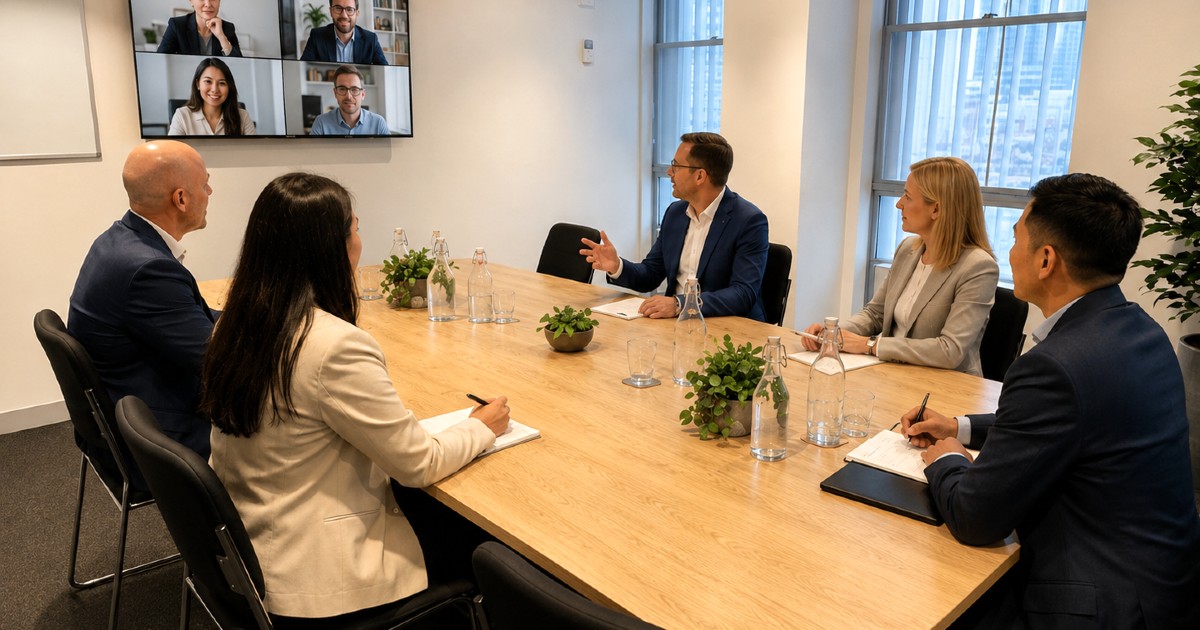
A hybrid event combines in-person attendance with remote participation through video conferencing or live streaming. Delegates in the room experience the event directly, while remote participants join via their computers or devices. Both audiences need to feel equally included and engaged throughout the session.
Hybrid formats have become standard for corporate meetings, training sessions, conferences and town halls. They allow organisations to include team members across different locations without requiring everyone to travel. This flexibility makes hybrid events particularly valuable for national teams, interstate stakeholders and international participants.
The challenge lies in creating an experience that works equally well for both groups. Remote participants often feel like afterthoughts when venues lack proper audiovisual setups. In-person delegates may find their experience diminished by constant technical adjustments. A well-chosen venue addresses both concerns from the outset.
Why Venue Choice Matters More for Hybrid Events
Standard meeting rooms were designed for face-to-face interactions. They assume everyone present is physically in the room. Hybrid events require venues that account for a second audience watching through screens. This fundamental shift affects every aspect of the space.
Lighting needs to work for cameras as well as human eyes. Sound systems must capture presenters clearly for remote participants while maintaining comfortable volume for in-room delegates. Internet bandwidth must handle high-quality video streaming without dropouts or delays.
Venues that lack these capabilities force organisers into workarounds. Portable equipment, temporary setups and external technicians add cost, complexity and risk. Purpose-built spaces with integrated hybrid technology eliminate these concerns from the planning stage.
How to Evaluate Audiovisual Capabilities for Hybrid Events
Audiovisual equipment forms the backbone of any hybrid event. Your venue assessment should examine each component in detail.
Video and Camera Systems
Professional-grade cameras positioned to capture presenters, panel discussions and audience interactions make remote participants feel present. Look for venues with fixed camera installations that cover the presentation area and can switch between views. Portable cameras may work but require additional operator support.
Screen displays should be large enough for in-room delegates to see remote participants clearly. Dual-screen setups work well for showing both the presentation content and the remote attendees simultaneously.
Audio and Microphone Systems
Clear audio matters more than video quality for remote participants. Venues should have ceiling-mounted or table microphones that capture speakers without requiring them to hold handheld devices. Echo cancellation and noise suppression prevent the hollow, distant sound common in poorly equipped rooms.
Test the audio by recording a sample conversation in the space. Play it back through standard laptop speakers to hear what remote participants will experience.
Internet Connectivity and Bandwidth
Hybrid events demand substantial bandwidth. High-definition video streaming typically requires a minimum of 10-20 Mbps upload speed per stream. Multiple concurrent streams, screen sharing and participant video feeds increase these requirements significantly.
Ask venues about their dedicated internet connections. Shared building Wi-Fi often cannot guarantee consistent speeds during peak usage. Hardwired ethernet connections offer more reliable performance for critical streaming equipment.
Streaming and Recording Capabilities
Some venues offer integrated streaming platforms that connect directly to Microsoft Teams, Zoom or other conferencing applications. Others may require you to bring your own streaming setup. Understand what the venue includes and what you need to arrange separately.
Recording capabilities allow you to share sessions with delegates who could not attend live. Check whether the venue can record both in-room and remote participants in a single unified recording.
What On-Site Technical Support Means for Your Event
Equipment only works when someone knows how to operate it. On-site technical support can make the difference between a smooth event and a stressful scramble.
Pre-Event Setup and Testing
Technical staff should be available before your event to help configure equipment, test connections and run through the presentation flow. This preparation time allows you to identify and resolve issues before delegates arrive.
Ask venues how far in advance you can access the space for setup. Same-day access limits your ability to troubleshoot problems.
Live Event Support
During the event, technical support should be readily available to address issues as they arise. A dropped internet connection or malfunctioning microphone needs immediate attention. Venues with dedicated technical staff on-site can respond faster than those relying on external contractors.
Karstens offers dedicated on-site technical and event support at its Melbourne CBD venue, ensuring presenters and organisers have immediate assistance throughout their hybrid events.
Post-Event Follow-Up
After your event, you may need recordings, attendee connection logs or technical reports. Understand what the venue can deliver and in what timeframe.
How Room Configuration Affects Hybrid Event Success
The physical arrangement of your meeting space directly impacts how well remote participants can see and hear what happens in the room.
Presenter Positioning and Camera Angles
Presenters should face cameras directly rather than at angles that obscure their features. The presentation area needs consistent lighting that illuminates speakers without creating harsh shadows or glare on screens.
Avoid setups where presenters turn away from cameras to address in-room audiences. U-shaped and hollow square configurations often create this problem. Theatre, classroom and boardroom layouts typically work better for hybrid formats.
Audience Visibility for Remote Participants
Remote participants feel more connected when they can see in-room delegates. Camera positions that capture audience reactions during discussions and Q&A sessions help bridge the physical divide.
Consider how raised hands, questions and interactions will be communicated to remote participants. Dedicated moderators can relay in-room activity, or additional cameras can audience views.
Flexible Seating Arrangements
Your delegate numbers may change between booking and event day. Venues with flexible room configurations allow you to adjust seating without compromising camera angles or audio coverage.
Pillar-less rooms offer the most flexibility. Columns and obstructions limit layout options and can block camera views.
Why CBD Locations Simplify Hybrid Event Logistics
Central business district venues offer practical advantages for corporate events, particularly when delegates travel from multiple locations.
Transport Accessibility for In-Person Delegates
Melbourne CBD offers extensive public transport connections via train, tram and bus networks. Delegates arriving from suburbs, regional areas or interstate can reach central locations more easily than venues in outlying areas.
Proximity to Southern Cross Station and Flinders Street Station gives your delegates multiple arrival options. Tram routes along Collins Street, Bourke Street and Swanston Street connect to most CBD venues.
Accommodation and Dining Options
Delegates attending multi-day events or travelling from interstate need convenient accommodation. CBD venues sit close to numerous hotels at various price points. This convenience reduces coordination effort and allows delegates to manage their own arrangements.
Lunch breaks and networking opportunities benefit from nearby dining options. CBD locations offer restaurants, cafes and takeaway options that can accommodate various dietary requirements and time constraints.
Professional Business Environment
CBD venues project professionalism that reflects well on your organisation and event. Client-facing meetings, board presentations and external stakeholder events benefit from polished surroundings in recognised business districts.
Karstens Melbourne occupies a central CBD location close to public transport, hotels, restaurants and parking, making attendance easier for your guests and creating a professional setting for your event.
What to Look for in Venue Catering for Hybrid Events
Catering supports delegate comfort and energy throughout your event. Hybrid formats introduce additional considerations beyond standard meeting catering.
Timing and Break Coordination
Remote participants may be in different time zones or have different break expectations than in-room delegates. Plan catering schedules that accommodate both groups. Build in sufficient break time for in-room delegates to eat without extending sessions beyond what remote participants expect.
Dietary Requirements and Flexibility
Corporate events typically include delegates with various dietary needs. Vegetarian, vegan, gluten-free, halal and other requirements need accommodation without singling out individuals. Venues with in-house catering can often respond more flexibly to last-minute dietary notifications than those using external caterers.
Ask venues about their process for managing dietary requirements and their ability to adjust final numbers close to the event date.
Refreshments and Energy Management
All-day events demand sustained energy for delegates. Tea, coffee and light refreshments available throughout the day help maintain focus and engagement. Venues that include refreshments in their hire packages simplify budgeting and ensure delegates have access to what they need when they need it.
How to Assess Breakout Spaces for Hybrid Events
Breakout sessions allow smaller groups to discuss specific topics, complete exercises or network. Hybrid events require breakout spaces that can accommodate both in-person and remote participants.
Separate Rooms with AV Capabilities
Each breakout space ideally has its own audiovisual setup for hybrid participation. Remote participants should be able to join specific breakout sessions rather than being limited to plenary sessions only.
Ask venues about breakout room AV capabilities and whether technical support extends to these spaces during your event.
Proximity and Transition Time
Breakout rooms should be close enough to the main space that transitions happen quickly. Distant breakout areas eat into session time and disrupt event flow.
Check whether breakout spaces are on the same floor or require lift access. Factor transition time into your event schedule.
Informal Networking Areas
Casual networking happens in corridors, foyers and communal areas between sessions. Comfortable breakout spaces with seating encourage informal conversations that build relationships and generate ideas.
Karstens venues include spacious breakout areas with ergonomic seating and complimentary Nespresso coffee and tea, supporting delegate comfort between sessions.
Understanding Booking Flexibility for Hybrid Events
Hybrid event planning involves more variables than purely in-person gatherings. Booking policies that accommodate uncertainty reduce your risk.
Attendee Number Adjustments
The mix of in-person and remote attendance may shift as your event approaches. Venues with flexible policies allow you to adjust final attendee numbers without penalties or complex renegotiations.
Ask venues about their cutoff dates for number adjustments and any associated fees.
Room Substitution Options
Your attendance projections may prove larger or smaller than expected. Venues that can substitute rooms of different sizes help you match your actual needs without starting the booking process again.
Cancellation and Rescheduling Terms
External factors may force event postponement or cancellation. Understanding venue cancellation policies before booking allows you to assess your exposure.
Look for venues offering reasonable cancellation terms, particularly for bookings made well in advance of the event date.
A Step-by-Step Guide to Selecting Your Melbourne Hybrid Venue
Follow this process to evaluate and select the right venue for your hybrid corporate event.
Step 1: Define Your Event Requirements
Start by documenting your event specifications. How many in-person delegates do you expect? How many remote participants? What presentation formats will you use? Will you have breakout sessions? What catering do you need?
Clear requirements help you filter venues quickly and evaluate options consistently.
Step 2: Research and Shortlist Venues
Identify venues that meet your basic capacity and location requirements. Focus on those with demonstrated hybrid capabilities rather than venues that might be able to accommodate hybrid with additional equipment.
Purpose-built corporate venues typically offer more integrated hybrid support than hotels or multi-purpose spaces.
Step 3: Request Detailed Information
Contact shortlisted venues with specific questions about AV equipment, internet bandwidth, technical support, catering options and booking flexibility. Their responses will reveal their understanding of hybrid event requirements.
Venues that answer confidently with specific details have likely supported similar events before.
Step 4: Conduct Site Visits
Visit your top candidates in person. Test the AV equipment. Check internet speeds. Observe lighting conditions. Sit in different positions to see what delegates will experience.
Ask to see the venue set up for a hybrid event if possible. Empty rooms look different from configured spaces.
Step 5: Request a Detailed Proposal
Ask for written proposals that itemise what is included in the hire fee and what costs extra. Compare proposals based on total delivered value rather than headline rates alone.
Step 6: Confirm and Coordinate
Once you select your venue, confirm all details in writing. Schedule pre-event setup time. Establish communication channels with your venue contact and technical support team.
Common Mistakes When Booking Melbourne Hybrid Venues
Avoid these errors that can undermine your hybrid event success.
Assuming Standard Meeting Rooms Work for Hybrid
Rooms designed for in-person meetings often lack the audiovisual infrastructure, lighting and acoustic treatment needed for professional hybrid delivery. Test equipment before committing.
Underestimating Bandwidth Requirements
Multiple high-definition video streams consume significant bandwidth. Shared building Wi-Fi may not deliver consistent performance. Confirm dedicated internet capacity with the venue.
Neglecting Remote Participant Experience
Focus on what remote participants will see and hear, not just what happens in the room. Test the remote experience from a standard laptop before your event.
Booking Without Technical Support
Equipment without qualified operators creates risk. Ensure technical support is available throughout your event, not just during setup.
Ignoring Backup Plans
Internet connections fail. Equipment malfunctions. Have contingency plans for critical technical components. Know how the venue handles equipment failures.
Hybrid Event Venue Checklist for Melbourne
Use this checklist during your venue assessment and site visits.
Audiovisual Equipment
- Professional-grade cameras with presenter coverage
- Ceiling or table microphones with echo cancellation
- Large display screens visible to all in-room delegates
- Integrated streaming capabilities
- Recording options for post-event access
Technical Infrastructure
- Dedicated high-speed internet connection
- Minimum 20 Mbps upload bandwidth confirmed
- Hardwired ethernet available for streaming equipment
- Backup internet connection or failover option
Support Services
- On-site technical staff during event hours
- Pre-event setup and testing time included
- Dedicated event coordinator or account manager
- Clear escalation process for technical issues
Room Configuration
- Pillar-less space allowing flexible layouts
- Consistent lighting for cameras
- Acoustic treatment reducing echo and external noise
- Natural light with controllable window treatments
Location and Access
- CBD location close to public transport
- Nearby hotels for interstate delegates
- Parking options for those driving
- Clear wayfinding and professional reception
Catering and Delegate Comfort
- In-house catering with dietary accommodation
- Coffee, tea and refreshments available throughout
- Comfortable breakout spaces between sessions
- Ergonomic seating in main room and breakout areas
Booking and Flexibility
- Attendee number adjustment permitted close to event
- Room substitution available if requirements change
- Reasonable cancellation and rescheduling terms
- Transparent pricing with inclusions clearly stated
How Karstens Supports Hybrid Corporate Events in Melbourne
Karstens has supported organisations since 2006 with professional event experiences tailored to client needs. The Melbourne CBD venue offers purpose-built spaces designed to support productive business events, including hybrid conferences, meetings and training sessions.
Karstens Melbourne includes audiovisual equipment and presentation technology in the venue hire, removing the need for external equipment rental. In-house hybrid conferencing technology connects in-room and remote participants through integrated camera, microphone and streaming systems.
Dedicated on-site technical support ensures presenters and organisers have immediate assistance throughout their events. Karstens Melbourne offers a central CBD location close to public transport, hotels and dining, making attendance easier for delegates travelling from various locations.
Flexible room configurations accommodate changing attendee numbers and presentation formats. In-house catering accommodates dietary requirements with restaurant-quality food prepared on-site. Breakout areas with ergonomic seating and complimentary Nespresso coffee and tea support delegate comfort between sessions.
FAQs about Melbourne Meeting Venues for Hybrid Events in 2026
What makes a venue hybrid-ready for corporate events?
A hybrid-ready venue has professional-grade cameras, microphones with echo cancellation, large display screens, high-speed dedicated internet and integrated streaming capabilities. On-site technical support should be available throughout your event to address any issues that arise with equipment or connections.
How much internet bandwidth do hybrid events require?
High-definition video streaming typically needs a minimum of 10-20 Mbps upload speed per stream. Multiple concurrent streams, screen sharing and participant video increase requirements. Ask venues about dedicated internet connections rather than shared building Wi-Fi.
Why choose a CBD location for a hybrid corporate event in Melbourne?
Melbourne CBD locations offer easy access via train, tram and bus networks for in-person delegates. Nearby hotels suit interstate attendees, and dining options support networking and catering needs. Karstens Melbourne sits in the CBD close to Southern Cross Station and major tram routes.
What room layouts work for hybrid events?
Theatre, classroom and boardroom layouts typically work well because presenters face cameras directly. U-shaped and hollow square configurations can create problems when presenters turn away from cameras to address in-room audiences. Pillar-less rooms offer the most layout flexibility.
Should the venue have on-site technical support?
On-site technical support is valuable for hybrid events where equipment issues need immediate resolution. Karstens offers dedicated technical and event support staff at its Melbourne venue, ensuring presenters have assistance before, during and after their sessions.
How do I evaluate a venue's AV capabilities before booking?
Request a site visit and test the equipment in person. Record sample audio and play it back through laptop speakers to hear what remote participants will experience. Ask specific questions about camera quality, microphone coverage and streaming platform compatibility.
What catering considerations matter for hybrid events?
Plan break schedules that work for both in-room delegates and remote participants who may be in different time zones. Ensure the venue can accommodate dietary requirements. Venues with in-house catering typically offer more flexibility for last-minute adjustments.
Can breakout sessions include remote participants?
Yes, if breakout rooms have their own audiovisual setups. Ask venues whether breakout spaces include hybrid capabilities and whether technical support extends to these rooms during your event. Karstens venues include breakout areas that can be configured for hybrid participation.
What backup plans should I have for a hybrid event?
Prepare for internet failures and equipment malfunctions. Know how the venue handles technical issues and what backup equipment is available. Having a secondary internet connection option and understanding the escalation process for problems helps reduce risk.
How far in advance should I book a Melbourne hybrid venue?
Book as early as your schedule allows, particularly for larger events or specific date requirements. Popular CBD venues fill quickly during peak corporate event seasons. Early booking also gives you more time for planning and coordination with the venue team.
Choosing the Right Melbourne Venue for Your Hybrid Event
Selecting a Melbourne meeting venue for hybrid events requires attention to audiovisual capabilities, technical support, room configuration, location convenience and booking flexibility. The venue you choose shapes the experience for both in-person and remote delegates.
Purpose-built corporate venues with integrated hybrid technology reduce complexity and risk compared to spaces requiring external equipment and contractors. CBD locations simplify logistics for delegates while projecting professionalism for your organisation.
Use the evaluation framework and checklist in this guide during your venue assessment process. Test equipment, ask detailed questions and compare proposals based on total delivered value. With the right venue partner supporting your event, you can deliver a polished hybrid experience that engages all your delegates regardless of where they join from.